


Starting your investment journey can feel like walking into a room where everyone is speaking a completely different language. You are bombarded with acronyms, financial jargon, and endless charts. Two of the most common terms you will constantly run into are ETFs (Exchange-Traded Funds) and mutual funds.
If you want to build long-term wealth, understanding the differences between these two options is crucial. Both vehicles allow you to pool your money with other investors to buy a diversified basket of stocks, bonds, or other assets. However, the way they operate, trade, and charge fees is entirely different.
Choosing between them can have a significant impact on your overall returns, tax bills, and daily trading flexibility. This comprehensive guide will break down everything you need to know about ETF vs mutual funds explained in plain English, helping you make the right choice for your portfolio.
What is ETF vs Mutual Funds Explained?

To understand this debate, we need to lift the hood and look at how each investment vehicle is built. Both options are designed to solve a major problem for everyday investors: diversification. Instead of buying individual shares of fifty different companies, you buy one fund that holds them all for you.
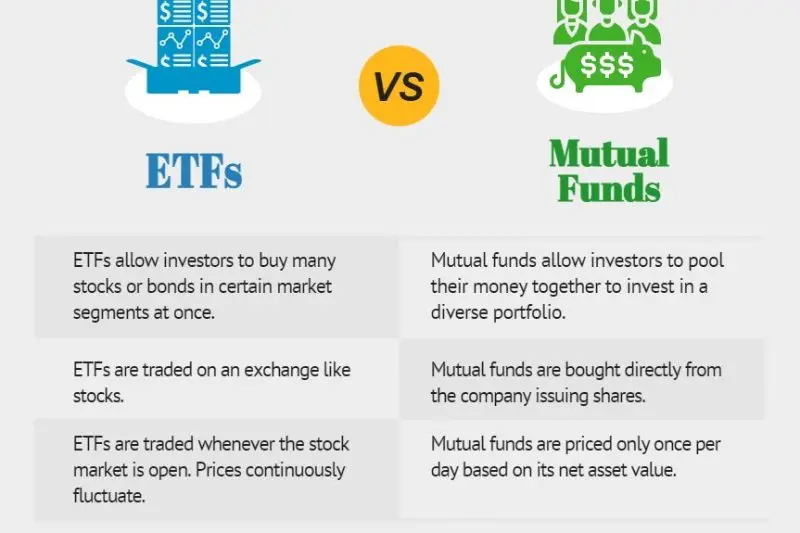
An Exchange-Traded Fund, or ETF, is an investment fund that trades on a public stock exchange, just like an individual stock. You can buy or sell shares of an ETF throughout the trading day at fluctuating prices. Most ETFs are designed to track a specific index, such as the S&P 500, meaning they are passively managed.
A mutual fund, on the other hand, is a company that pools money from many investors and invests it in a diversified portfolio. Unlike ETFs, mutual funds only trade once a day after the markets close. Many traditional mutual funds are actively managed, meaning a professional portfolio manager is actively picking stocks to try and beat the market.
Why is ETF vs Mutual Funds Explained Important?
Every dollar you save on fees and taxes is an extra dollar that can compound over time. Understanding how these funds operate matters because it directly affects your wallet and your investment strategy.
First, it impacts your costs. ETFs generally boast lower ongoing management fees because they usually track an index automatically. Actively managed mutual funds require paying for a team of researchers, which drives up expenses. Over twenty or thirty years, a slight difference in fees can cost you tens of thousands of dollars in lost returns.
Second, it changes how you interact with the market. If you value flexibility and want to know the exact price you are paying the moment you click “buy,” ETFs offer that control. If you prefer a hands-off approach where you automatically invest a fixed dollar amount every month without worrying about daily market swings, mutual funds are highly efficient.
Detailed Step-by-Step Guide to the Differences
To truly understand how these funds work in the real world, we need to compare their mechanics across several key areas. Let us break down exactly how they differ step-by-step.
1. How They Are Traded
The most obvious functional difference is when and how you buy them. ETFs are traded on stock exchanges throughout the day. When you want to buy an ETF, you place an order through your brokerage account at any time during market hours, and your order executes instantly at the current market price.
Mutual funds do not trade on an open exchange during the day. Instead, all buys and sells are processed at the very end of the trading day. Every investor pays or receives the exact same price, known as the Net Asset Value (NAV), which is calculated after the market closes.
2. Pricing and Transparency
Because ETFs trade like stocks, their prices fluctuate second by second based on supply and demand. You can see up-to-the-minute pricing before you trade. Furthermore, most ETFs disclose their exact holdings every single day, so you always know what you own.
Mutual fund pricing is static until the end of the day. If you place an order at 10:00 AM, you will not know the exact price you paid until that evening. Mutual funds also tend to be less transparent, often disclosing their full list of holdings only once every quarter.
3. Investment Minimums
ETFs are highly accessible for beginners because you can purchase as little as a single share. Many modern brokerages even allow you to buy fractional shares, meaning you can start investing in an ETF with as little as five dollars.
Mutual funds frequently require a flat minimum initial investment. This minimum often ranges from one thousand to three thousand dollars. While subsequent automatic investments can be much smaller, the upfront barrier to entry is higher for beginners.
4. Tax Efficiency
This is a hidden structural advantage that favors ETFs. When an investor wants to sell their shares of an ETF, they simply sell them to another investor on the stock market. The fund itself does not have to sell its underlying stocks, which limits taxable capital gains.
When an investor wants to cash out of a mutual fund, the fund manager often must sell off underlying stocks to generate the cash to pay that investor. This sale can trigger capital gains taxes for everyone who holds the fund, even if you did not sell a single share yourself.
Benefits of ETFs
- Intraday liquidity: You can buy and sell whenever the market is open, giving you ultimate control over your entry and exit points.
- Lower expense ratios: Because most ETFs track standard market indexes, they do not require expensive active management, resulting in lower costs.
- No investment minimums: You can get started with the price of a single share, making it highly accessible for young or new investors.
- Superior tax efficiency: The unique creation and redemption mechanism of ETFs keeps capital gains distributions remarkably low.
- Wide variety of niches: You can easily find highly targeted ETFs focusing on specific sectors like clean energy, robotics, or cybersecurity.
Benefits of Mutual Funds
- Simplicity for automatic investing: You can easily set up your account to automatically invest a specific dollar amount every week or month, regardless of share price.
- Professional human oversight: Actively managed funds give you access to professional managers who attempt to shield your money during market downturns.
- No intra-day temptation: Because prices only update once a day, you are less likely to make emotional, impulsive trades based on short-term market panic.
- Perfect for retirement accounts: They integrate flawlessly with workplace 401k plans, where automatic payroll deductions are standard practice.
Disadvantages and Risks of ETFs
- Trading commissions and spreads: While many brokers offer commission-free trading, you still pay a small “bid-ask spread” cost when buying and selling.
- Over-trading temptation: The ability to trade instantly can lead to bad behavior, encouraging investors to treat long-term assets like short-term gambling chips.
- Tracking error risk: Occasionally, an ETF might fail to perfectly replicate the performance of the index it is supposed to mirror.
Disadvantages and Risks of Mutual Funds
- Higher fees: Expense ratios are generally higher, and some funds charge “loads,” which are sales commissions paid when you buy or sell.
- Unexpected tax bills: You can receive a capital gains tax distribution at the end of the year even if the overall fund lost money.
- Illiquidity during the day: You cannot quickly react to breaking news or major market shifts during trading hours.
- High entry barriers: The initial account minimums can prevent people with smaller savings from building a diversified portfolio right away.
Common Mistakes to Avoid
One of the biggest mistakes investors make is ignoring the expense ratio. A fee of one percent might sound small, but it can eat up a massive portion of your returns over thirty years. Always check the fees before committing your hard-earned money.
Another frequent error is failing to look under the hood of your funds. Many people buy multiple ETFs or mutual funds thinking they are diversifying, only to realize that all those funds hold the exact same mega-cap technology stocks. This creates overlapping risk without real diversification.
Finally, do not let short-term volatility dictate your strategy. Buying an ETF and selling it three days later because the price dropped slightly defeats the entire purpose of index investing. Choose your strategy, automate your contributions, and give your money time to grow
What is the main difference between an ETF and a mutual fund?
The main difference is how they trade and how they are priced. ETFs trade on a stock exchange throughout the day at fluctuating prices, while mutual funds are bought and sold directly through the fund company at a single price calculated at the end of the trading day.
Which option is better for a complete beginner?
ETFs are often better for beginners with limited cash because they lack high initial investment minimums. However, if a beginner wants to set up automated, fixed-dollar investments every month through a retirement account, a no-load mutual fund can be equally effective.
Are ETFs safer than mutual funds?
Neither is inherently safer than the other. The safety of the fund depends entirely on what assets are held inside it. An ETF that holds volatile technology stocks is riskier than a conservative mutual fund that holds government bonds.
Can I automate my investments with ETFs?
Yes, many modern brokerages now allow you to set up automatic recurring investments into ETFs, including the ability to purchase fractional shares. Historically, this feature was only available for traditional mutual funds.
What are expense ratios and why do they matter?
An expense ratio is the annual fee that an ETF or mutual fund charges to cover its operational and management costs. It is expressed as a percentage of your total investment. Lower expense ratios mean more of your money stays invested to grow over time.
Why are ETFs considered more tax-efficient?
ETFs are more tax-efficient because of how they handle buying and selling underlying securities. They use an “in-kind” creation and redemption process that minimizes actual stock sales within the fund, reducing the taxable capital gains passed on to shareholders.
Expert Tips & Bonus Points
If you are choosing between an ETF and a mutual fund for a standard taxable brokerage account, choose the ETF. The structural tax efficiency of ETFs makes them far superior for accounts where you have to pay capital gains taxes every year. Keep your mutual funds inside tax-advantaged accounts like IRAs or 401ks, where internal capital gains distributions will not trigger immediate tax bills.
Always watch out for hidden fees known as sales loads. Some mutual funds charge a front-end load, taking a percentage of your money before it is even invested. Others charge a back-end load when you sell your shares. Stick to “no-load” funds to ensure all your money goes directly toward building your net worth.
Conclusion
Navigating the financial world becomes much easier once you understand the core mechanics of your investment choices. When looking at ETF vs mutual funds explained, it is clear that neither option is universally superior to the other. Instead, they serve different types of investors and financial goals.
ETFs provide incredible flexibility, lower cost structures, and excellent tax efficiency, making them a fantastic tool for self-directed investors who want total control over their assets. Mutual funds offer a structured, disciplined environment that is perfect for automated, long-term wealth building without the daily distractions of stock market volatility.
Ultimately, your success as an investor will not be determined by whether you chose an ETF or a mutual fund. It will be determined by your consistency, your diversification, and your ability to keep fees low. Review your current financial situation, determine your budget, and select the vehicle that fits your personal investing style.
