


Introduction
Managing your money wisely starts with one simple habit: creating a budget. If you’ve ever wondered where your paycheck goes each month or struggled to save money, learning how to create a monthly budget can completely change your financial life. A well-planned budget helps you understand your income, control your spending, reduce debt, and work toward your financial goals with confidence.
Many people think budgeting is restrictive, but the reality is quite different. A budget gives you freedom because it allows you to spend your money intentionally instead of wondering where it disappeared. Whether you’re a student, a working professional, a freelancer, or managing a family, budgeting is an essential skill that helps you stay financially organized.
The good news is that creating a monthly budget doesn’t require complicated software or advanced financial knowledge. With a few simple steps and consistent habits, anyone can build a realistic budget that fits their lifestyle.
In this guide, you’ll learn how to create a monthly budget from scratch, understand why budgeting matters, discover practical strategies for managing expenses, and avoid common mistakes that often lead to financial stress. By following these budgeting techniques, you’ll be well on your way to achieving financial stability and long-term success.
What is How to Create a Monthly Budget?
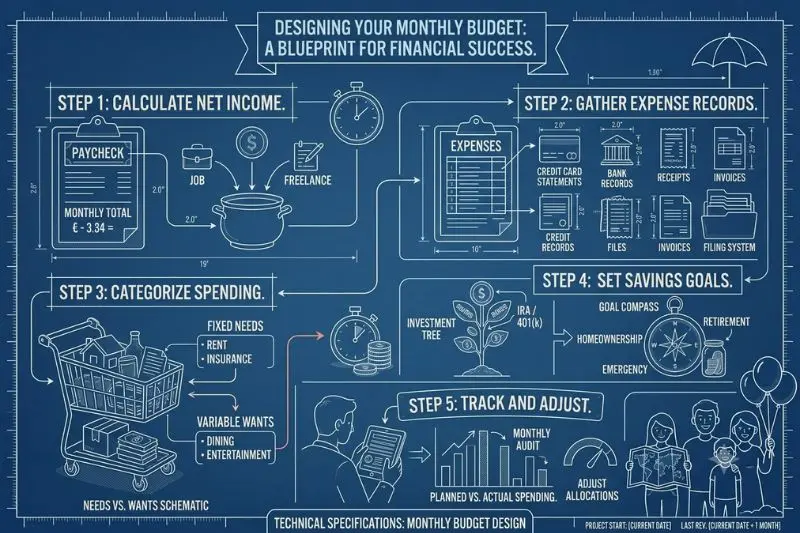
Creating a monthly budget means making a financial plan that outlines how you will spend, save, and manage your income over a single month. It involves tracking your earnings, listing your expenses, and allocating money to different categories before you begin spending.
A monthly budget helps answer important questions such as:
- How much money do I earn?
- How much do I spend?
- Where is my money going?
- How much can I save?
- Which expenses should I reduce?
Instead of spending randomly, budgeting helps you make intentional financial decisions that align with your goals.
A basic monthly budget usually includes:
- Income
- Housing expenses
- Utilities
- Transportation
- Food
- Insurance
- Debt payments
- Entertainment
- Savings
- Investments
- Emergency fund
Regardless of your income level, budgeting helps you maximize every dollar you earn.
Why is Creating a Monthly Budget Important?
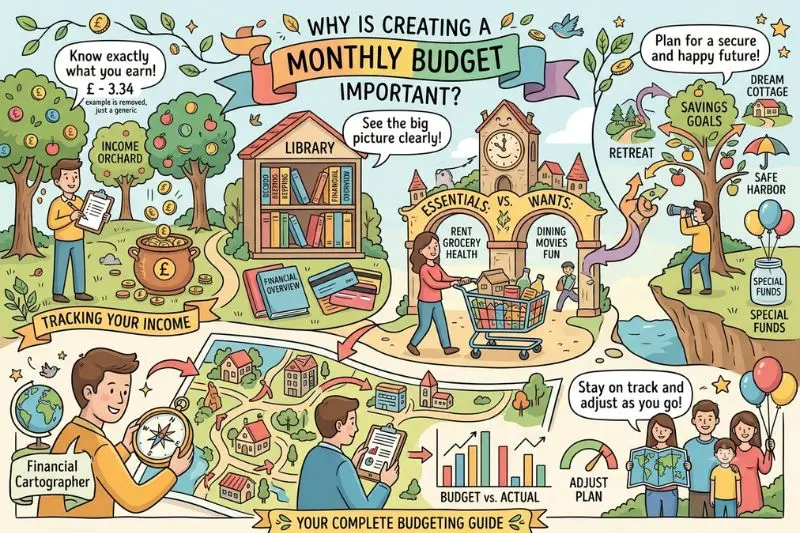
Learning how to create a monthly budget provides a strong financial foundation. It helps you stay in control of your money instead of allowing money to control you.
Here are several reasons budgeting is important.
Gives You Full Control Over Your Money
A budget allows you to know exactly where your income goes each month. Instead of guessing, you have a clear financial plan.
Helps You Save Money
When you monitor your spending, it becomes easier to identify unnecessary expenses and redirect that money toward savings.
Prevents Overspending
Without a budget, it’s easy to make impulse purchases.
A spending plan creates limits that encourage smarter financial decisions.
Reduces Financial Stress
Knowing your bills are covered and your savings are growing provides peace of mind and reduces financial anxiety.
Helps You Reach Financial Goals
Whether your goal is buying a house, paying off debt, traveling, or building wealth, budgeting makes those goals achievable.
Improves Financial Discipline
Consistently following a monthly budget develops habits that support long-term financial success.
Step-by-Step Guide: How to Create a Monthly Budget
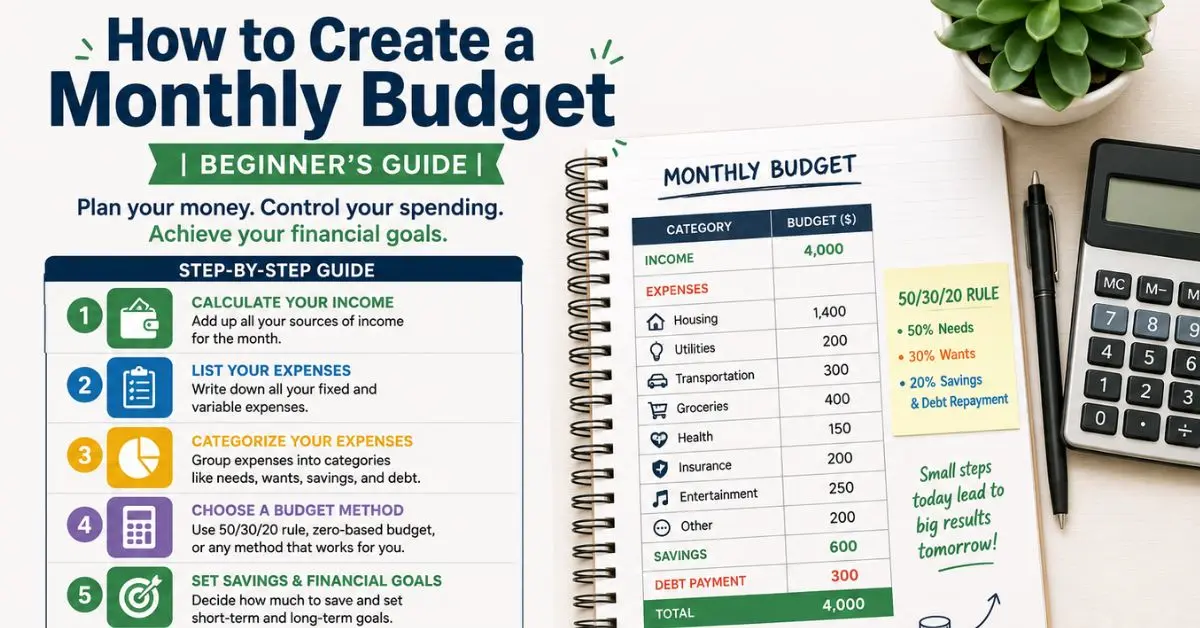
Step 1: Calculate Your Monthly Income
The first step in creating a budget is understanding exactly how much money you receive every month.
Include all income sources, such as:
- Salary
- Freelance income
- Business earnings
- Rental income
- Side hustle income
- Investment income
Use your after-tax income whenever possible since this reflects the money actually available for spending.
Example:
Salary: $3,000
Freelance Work: $500
Total Monthly Income: $3,500
Having an accurate income figure ensures your budget is realistic.
Step 2: List Every Monthly Expense
Now write down every expense you pay each month.
Separate them into two categories.
Fixed Expenses
These usually stay the same each month.
Examples include:
- Rent or mortgage
- Insurance
- Loan payments
- Internet
- Phone bill
- Subscription services
- Variable Expenses
These change from month to month.
Examples include:
- Groceries
- Fuel
- Dining out
- Entertainment
- Shopping
- Medical expenses
- Gifts
Tracking both fixed and variable expenses helps you understand where adjustments can be made.
Step 3: Track Your Spending Habits
Many people underestimate how much they spend.
Spend one month tracking every purchase.
You can use:
- Budgeting apps
- Mobile banking records
- Spreadsheet templates
- A notebook
At the end of the month, review your spending.
Ask yourself:
- Which expenses were necessary?
- Which purchases were impulsive?
- Where can I save money next month?
This simple exercise often reveals spending patterns you may not have noticed.
Step 4: Categorize Your Expenses
Organizing your expenses into categories makes your budget much easier to manage.
Common budget categories include:
- Housing
- Transportation
- Food
- Utilities
- Healthcare
- Insurance
- Debt repayment
- Entertainment
- Education
- Savings
- Investments
- Emergency fund
Grouping expenses also helps identify categories where spending can be reduced without affecting your quality of life.
Step 5: Choose a Budgeting Method
There isn’t a single budgeting system that works for everyone. Choose one that matches your financial habits and goals.
The 50/30/20 Rule
A popular method for beginners:
- 50% for essential needs
- 30% for personal wants
- 20% for savings and debt repayment
Zero-Based Budget
Every dollar of income is assigned a specific purpose until your remaining balance equals zero.
Envelope Budget System
Allocate cash into separate envelopes for different spending categories. Once an envelope is empty, spending in that category stops until the next month.
Choose the method that feels easiest to maintain consistently.
Step 6: Set Realistic Savings Goals
Saving should always be included in your monthly budget rather than treated as an afterthought.
Examples of savings goals include:
- Emergency fund
- Vacation
- New car
- Home down payment
- Retirement
- Education expenses
Even saving a small amount each month creates positive financial habits over time.
Instead of waiting until the end of the month to save what’s left, treat savings like any other monthly bill and prioritize it first.
Step 7: Reduce Unnecessary Expenses
Once you’ve created your budget, the next step is finding areas where you can spend less. Cutting unnecessary expenses doesn’t mean giving up everything you enjoy. Instead, it means spending more intentionally.
Review your monthly expenses and identify items that aren’t essential.
Examples include:
- Multiple streaming subscriptions
- Frequent dining out
- Impulse online shopping
- Expensive coffee or snacks
- Unused gym memberships
- Premium services you rarely use
Ask yourself these questions before making a purchase:
- Do I really need this?
- Can I find a cheaper alternative?
- Will this purchase help me reach my financial goals?
Even saving a small amount every week can add up to hundreds or thousands of dollars over a year.
Step 8: Build an Emergency Fund
An emergency fund is one of the most important parts of a successful budget. It provides financial protection when unexpected expenses arise.
Examples of emergencies include:
- Medical bills
- Car repairs
- Home maintenance
- Job loss
- Family emergencies
Financial experts generally recommend saving enough to cover three to six months of living expenses.
If that feels difficult, start with a smaller goal such as $500 or $1,000. Once you reach that milestone, continue building your savings over time.
Keeping your emergency fund in a separate savings account can reduce the temptation to spend it.
Step 9: Review and Adjust Your Budget Every Month
A budget is not something you create once and forget. Your income, expenses, and financial priorities may change from month to month.
At the end of each month, review your budget and compare your planned spending with your actual spending.
Consider the following questions:
- Did I stay within my budget?
- Which categories exceeded the limit?
- Where did I save money?
- What changes should I make next month?
Regular reviews help you improve your budgeting skills and stay focused on your financial goals.
Step 10: Make Budgeting a Long-Term Habit
Creating a monthly budget is only the beginning. Long-term success comes from following your budget consistently.
Here are a few habits that make budgeting easier:
Track your spending weekly.
Update your budget whenever your income changes.
Celebrate small financial milestones.
Avoid comparing your finances with others.
Stay committed even if you make mistakes.
Remember, budgeting is a lifelong skill that becomes easier with practice.
Benefits of Creating a Monthly Budget
Creating a monthly budget offers many advantages beyond simply tracking expenses.
Some of the biggest benefits include:
- Better control over your finances
- Reduced financial stress
- Improved saving habits
- Easier debt repayment
- Greater financial confidence
- Better spending decisions
- Increased emergency savings
- Clear financial goals
- Better preparation for unexpected expenses
- More opportunities to invest
- Improved family financial planning
- Greater financial independence
A well-managed budget allows you to spend with confidence because you know your essential expenses and savings are already covered.
Disadvantages / Risks
Although budgeting is highly beneficial, there are a few challenges beginners may face.
These include:
- Requires discipline and consistency.
- Tracking every expense can take time.
- Unexpected emergencies may disrupt your budget.
- Irregular income can make planning difficult.
- Budgeting may feel restrictive at first.
- Inflation can increase monthly expenses unexpectedly.
- Some financial goals require patience and long-term commitment.
Fortunately, these challenges become easier to manage as budgeting becomes a regular habit.
Common Mistakes to Avoid
Even with the best intentions, many beginners make budgeting mistakes that prevent them from reaching their financial goals.
Not Tracking Small Expenses
Small daily purchases may seem insignificant, but they add up quickly over time.
Coffee, snacks, online subscriptions, and impulse purchases can quietly consume a large portion of your monthly income.
Creating an Unrealistic Budget
A budget should fit your actual lifestyle.
Setting spending limits that are too strict often leads to frustration and abandoning the budget altogether.
Be realistic and allow room for occasional entertainment and personal spending.
Forgetting Irregular Expenses
Many people budget only for monthly bills and forget about occasional expenses such as:
- Annual insurance premiums
- Holiday shopping
- Birthday gifts
- School fees
- Vehicle maintenance
Include these costs by saving a small amount each month.
Ignoring Savings
Saving should never be treated as whatever money remains at the end of the month.
Instead, include savings as a fixed part of your monthly budget and pay yourself first.
Depending Too Much on Credit Cards
Using credit cards for unnecessary purchases can quickly create debt.
Only use credit responsibly and pay the balance in full whenever possible.
Not Reviewing Your Budget
Life changes, and so should your budget.
Reviewing your budget every month helps you adjust to income changes, new expenses, and evolving financial goals.
Giving Up Too Soon
Many people stop budgeting after one difficult month.
Remember that budgeting is a learning process. Every month provides an opportunity to improve your financial habits.
Consistency matters far more than perfection.
By avoiding these common mistakes and following a realistic budgeting plan, you’ll build stronger financial habits and make steady progress toward long-term financial success.
FAQs
What is a monthly budget?
A monthly budget is a financial plan that helps you manage your income and expenses over one month. It outlines how much money you earn, how much you plan to spend, and how much you intend to save. A well-structured budget allows you to make informed financial decisions and stay on track with your goals.
Why is creating a monthly budget important?
Creating a monthly budget is important because it gives you control over your finances. It helps prevent overspending, encourages regular savings, reduces financial stress, and ensures that essential expenses are covered before discretionary spending. Budgeting also makes it easier to achieve long-term financial goals such as buying a home, paying off debt, or building an emergency fund.
How much of my income should I save each month?
A common recommendation is to save at least 20% of your monthly income. However, if that isn’t possible, start with whatever amount you can afford—even 5% or 10% is a great beginning. The most important factor is consistency. Regular savings, no matter how small, can grow significantly over time.
Which budgeting method is best for beginners?
The 50/30/20 budgeting rule is one of the easiest methods for beginners.
It recommends dividing your income as follows:
50% for essential needs
30% for personal wants
20% for savings and debt repayment
This method is simple to follow and provides a balanced approach to money management.
How often should I review my budget?
You should review your budget at least once every month. If your income changes frequently or you have variable expenses, reviewing it weekly can help you stay on track. Regular reviews allow you to identify overspending, adjust spending limits, and improve your financial planning.
What should I do if I exceed my budget?
Going over budget occasionally is normal. Instead of giving up, identify which category exceeded the limit and understand why it happened. Adjust your spending in other categories if possible, and use the experience to improve your budget for the following month. Budgeting is a continuous learning process.
Can I create a monthly budget with an irregular income?
Yes. If your income changes from month to month, base your budget on your lowest expected monthly income. Prioritize essential expenses first, build an emergency fund, and allocate extra income toward savings or debt repayment during higher-income months.
Expert Tips & Bonus Points
Following these expert recommendations can make budgeting easier and more effective.
Pay Yourself First
Before paying bills or making purchases, transfer a portion of your income directly into your savings account. Treat savings as a fixed monthly expense rather than something you do only if money is left over.
Automate Your Savings
Set up automatic transfers from your checking account to your savings account every payday. Automation removes the temptation to spend money that should be saved.
Use Separate Accounts
Consider using separate bank accounts for daily spending, savings, and emergency funds. This helps you avoid accidentally spending money reserved for important financial goals.
Track Every Expense
Recording every purchase—even small ones—gives you a better understanding of your spending habits. This awareness often leads to smarter financial decisions.
Plan for Unexpected Expenses
Include a category in your budget for unexpected costs. Even a small monthly contribution can prevent financial stress when emergencies occur.
Increase Savings with Every Salary Raise
Whenever your income increases, save a portion of the additional money instead of increasing your lifestyle expenses. This simple habit accelerates wealth building.
Stay Consistent
The most successful budgets are not perfect—they are consistent. Continue budgeting every month, learn from your mistakes, and make adjustments as needed.
Conclusion
Learning how to create a monthly budget is one of the most valuable financial skills you can develop. A well-planned budget helps you understand where your money goes, control unnecessary spending, build healthy saving habits, and prepare for future financial goals. Regardless of your income level, budgeting gives you greater confidence and control over your finances.
The process doesn’t have to be complicated. By calculating your income, tracking expenses, choosing a budgeting method, setting realistic savings goals, and reviewing your progress regularly, you can create a budget that works for your lifestyle. Over time, these habits become second nature and contribute to lasting financial stability.
Remember that budgeting is not about restricting yourself from enjoying life. Instead, it’s about making intentional choices with your money so you can enjoy today while preparing for tomorrow. There may be months when unexpected expenses arise or your budget doesn’t go as planned, but consistency is more important than perfection.
By applying the strategies outlined in this guide, you’ll be better equipped to manage your finances, reduce stress, and work toward achieving your personal and financial goals. Every smart financial decision you make today brings you one step closer to a secure and successful future.
