



Introduction
Money is one of the most important tools in modern life. It affects the quality of our lifestyle, the opportunities we can access, and the level of security we feel every day. Yet, despite working hard and earning income, many people still struggle financially. The reason is not always low income—it is often poor financial habits.
This is where smart money management habits become extremely important. These habits are not about restricting your life or avoiding enjoyment. Instead, they are about making conscious and informed decisions with your money so that you can build stability and long-term security.
When you manage money wisely, you reduce financial stress and gain control over your future. You no longer feel uncertain about expenses or unexpected situations. Instead, you feel prepared and confident.
Smart money management habits include simple but powerful actions such as budgeting, tracking expenses, saving regularly, and avoiding unnecessary debt. These actions may seem small, but when practiced consistently, they create strong financial discipline.
The goal of this article is to guide you step-by-step through practical financial habits that anyone can follow. Whether you are a beginner or someone looking to improve your financial situation, these strategies will help you take control of your money and build a stable future.
What are Smart Money Management Habits?
Smart money management habits refer to the daily financial practices that help you control, save, and grow your money effectively. These habits are not complex theories or advanced financial systems. Instead, they are simple routines that improve your financial awareness and decision-making.
At the core, smart money management habits involve understanding three key things:
- How much money you earn
- How much money you spend
- How much money you save or invest
When you clearly understand these three areas, your financial situation becomes much easier to manage.
These habits also include learning how to prioritize needs over wants, avoiding impulsive purchases, and planning for future expenses. For example, instead of buying something immediately, you may pause and evaluate whether it is necessary or just an emotional decision.
Another important part of money management is consistency. It is not about doing something once; it is about repeating good financial actions every month.
People who follow smart financial habits are more likely to achieve stability, avoid debt, and reach long-term goals like buying a home, starting a business, or retiring comfortably.
Why are Smart Money Management Habits Important?

Financial success does not happen by chance. It is built through discipline, awareness, and consistent habits. Smart money management habits play a key role in shaping your financial future.
One of the biggest reasons these habits are important is debt prevention. Many people fall into debt because they spend without planning. When you understand your financial limits, you naturally avoid overspending.
Another major reason is emergency preparedness. Life is unpredictable. Medical expenses, job loss, or urgent repairs can happen at any time. If you have savings built through strong financial habits, you can handle these situations without stress.
These habits also help you achieve financial goals. Whether you want to travel, buy a car, or invest in a business, proper planning ensures that your goals are realistic and achievable.
Additionally, good money habits reduce anxiety. Financial stress is one of the most common causes of mental pressure in adults. When your finances are organized, you feel more confident and relaxed.
In simple terms, smart money management habits give you control. Instead of money controlling your life, you control your money.
Detailed Step-by-Step Guide to Smart Money Management Habits
Step 1: Understand Your Income Clearly
The first step in financial management is knowing your total income. This includes salary, freelance earnings, business profits, or any other source.
Many people make the mistake of estimating their income roughly. However, accurate numbers are essential for planning. Write down your monthly income clearly so you know exactly what you are working with.
Once you understand your income, you can make better decisions about spending and saving.
Step 2: Track Every Expense
Expense tracking is one of the most powerful financial habits. Without it, money often disappears without explanation.
Start by recording all your expenses, including:
- Daily food and transport
- Utility bills
- Shopping and entertainment
- Online subscriptions
You can use a notebook or a simple mobile app. The method does not matter as long as you stay consistent.
After a few weeks, you will start noticing spending patterns. This awareness is the first step toward financial control.
Step 3: Create a Realistic Monthly Budget
A budget is your financial roadmap. It tells your money where to go instead of wondering where it went.
A simple and effective budgeting method is:
- 50% for essential needs (rent, food, bills)
- 30% for wants (entertainment, shopping)
- 20% for savings and investments
This structure is flexible, especially for beginners. The goal is to balance spending and saving without feeling restricted.
A budget also helps prevent impulse buying because you already have a clear spending plan.
Step 4: Build an Emergency Fund
An emergency fund is a financial safety net. It protects you from unexpected expenses.
Ideally, you should save enough to cover 3 to 6 months of living expenses. However, if that feels difficult, start small.
Even saving a small amount every month creates security over time. The key is consistency, not speed.
An emergency fund ensures that you do not rely on loans or credit cards during emergencies.
Step 5: Avoid Unnecessary Debt
Debt is not always bad, but unmanaged debt can become a financial burden. One of the smartest money habits is avoiding unnecessary borrowing.
Avoid loans for non-essential purchases like luxury items or unnecessary shopping.
If you already have debt, focus on paying high-interest debt first. Also, avoid adding new debt until old debt is under control.
This discipline helps you maintain financial stability and peace of mind.
Step 6: Start Saving Regularly
Saving money is the foundation of financial success. Even small savings can grow over time if done consistently.
Treat saving like a fixed expense. Instead of saving what is left, save first and spend what remains.
This simple shift in mindset makes a huge difference in long-term financial health.
Step 7: Develop Basic Investment Thinking
Once you start saving regularly, the next step is learning about investments. Investing helps your money grow instead of staying idle.
You do not need advanced knowledge to begin. Start with simple options and gradually learn more as you gain confidence.
The goal is to understand that money should not just be stored—it should grow.
Smart Money Management Habits for Financial Success
Benefits of Smart Money Management Habits
Developing smart money management habits brings long-term financial and personal advantages. These benefits go beyond just saving money—they improve your lifestyle, mindset, and future security.
One of the biggest benefits is financial stability. When you manage money properly, you always know where you stand financially. You are less likely to face sudden shortages or panic during emergencies.
Another major benefit is better control over spending. Instead of spending randomly, you start making intentional decisions. This reduces wasteful expenses and helps you prioritize what truly matters.
Smart money habits also lead to consistent savings growth. Even small amounts saved regularly can accumulate into a strong financial base over time. This gives you confidence and flexibility in life.
You also gain reduced financial stress. Money problems are a major source of anxiety for many people. When your finances are organized, your mental peace improves significantly.
Other key benefits include:
Improved ability to handle emergencies without debt
Faster achievement of financial goals like buying a house or car
Better decision-making in daily life
Increased confidence in managing money
Long-term wealth-building opportunities
Reduced dependency on loans or credit cards
Over time, these benefits create a strong financial foundation that supports both short-term needs and long-term dreams.
Disadvantages / Risks of Poor Money Management
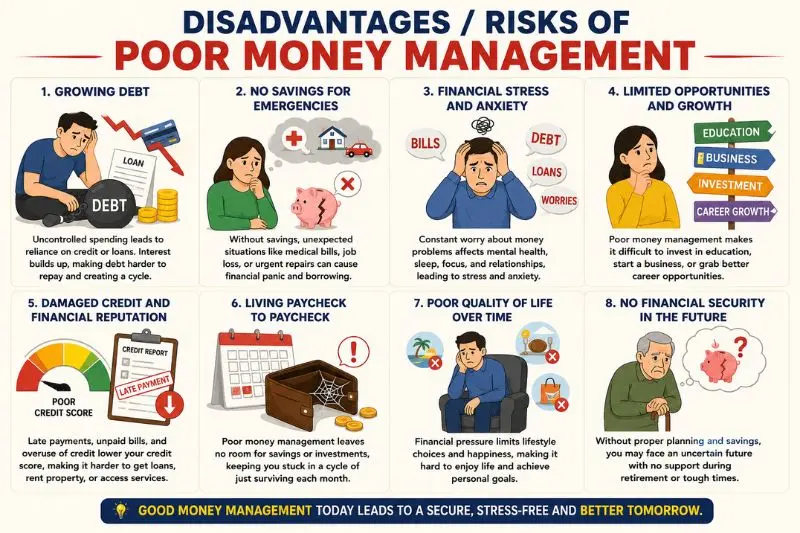
While smart money management habits are highly beneficial, ignoring them or practicing poor financial behavior can lead to serious problems.
One of the biggest risks is debt accumulation. Without proper budgeting, people often spend more than they earn, leading to loans and credit card debt that becomes difficult to manage.
Another risk is lack of savings. Without regular saving habits, even small emergencies can create financial crises. Many people are forced to borrow money during urgent situations because they have no backup fund.
Poor money management can also lead to financial stress and anxiety. Constant worry about bills, expenses, and debt affects mental health and reduces productivity.
Other risks include:
- Living paycheck to paycheck
- No financial security for emergencies
- Difficulty achieving long-term goals
- Poor credit score due to missed payments
- Dependence on others for financial support
- Limited investment opportunities
Additionally, bad financial habits often become harder to fix over time. The longer they continue, the more damage they create. That is why building good habits early is extremely important.
Common Mistakes to Avoid in Money Management
Many people struggle financially not because they don’t earn enough, but because they repeat common mistakes. Avoiding these errors can significantly improve your financial situation.
Not Tracking Expenses
One of the most common mistakes is not knowing where money goes. Small daily expenses add up quickly, and without tracking, it becomes impossible to control spending.
Spending Without a Budget
Without a budget, financial decisions become random. This leads to overspending and lack of savings. A budget gives structure and direction to your money.
Ignoring Savings
Many people wait to save “what is left” after spending. Unfortunately, nothing is usually left. Successful money management starts with saving first, not last.
Relying on Credit for Lifestyle
Using credit cards or loans for non-essential lifestyle expenses is dangerous. It creates long-term debt that reduces financial freedom.
No Emergency Fund
Life is unpredictable. Without emergency savings, even small problems can turn into financial crises. This is one of the most dangerous mistakes.
motional Spending
Buying things based on emotions—stress, excitement, or comparison—often leads to regret. Financial decisions should always be logical, not emotional.
Ignoring Financial Planning
Many people avoid planning because it feels complicated. However, lack of planning is one of the main reasons for financial instability.
Avoiding these mistakes can dramatically improve your financial health and help you stay in control of your money.
Step-by-Step Strategy for Better Money Control
To build strong financial habits, you need a clear and practical system. Below is a simple strategy that anyone can follow.
Step 1: Set Financial Goals
Start by defining short-term and long-term goals. For example:
- Short-term: Save for a phone or vacation
- Long-term: Buy a house or build retirement savings
Clear goals give direction to your money habits.
Step 2: Categorize Your Spending
Divide your expenses into categories:
- Essentials (needs)
- Lifestyle (wants)
- Savings and investments
This helps you understand spending patterns clearly.
Step 3: Control Unnecessary Expenses
Identify areas where money is wasted. This could be frequent eating out, unnecessary subscriptions, or impulse shopping.
Reducing even small expenses can make a big difference over time.
Step 4: Automate Savings
One of the best habits is automating savings. Set a fixed amount that transfers to your savings account every month.
This ensures consistency and removes the temptation to spend.
Step 5: Review Finances Monthly
At the end of each month, review your income, expenses, and savings. This helps you understand progress and adjust your budget if needed.
Step 6: Increase Financial Knowledge
The more you learn about money, the better decisions you make. Read about budgeting, saving strategies, and basic investing.
Financial knowledge is a long-term investment in itself.
Real-Life Example of Smart Money Management
Consider a person earning a moderate monthly income. Without planning, they spend freely on food, shopping, and entertainment. By the end of the month, there is no savings and sometimes even debt.
Now imagine the same person following smart money habits:
- They create a budget
Track all expenses
Save 20% of income
Avoid unnecessary spending
Build an emergency fund - Within a few months, they notice a major difference. They feel less stressed, have savings, and start planning future goals confidently.
This simple comparison shows how powerful financial habits can be.
FAQs
What are the most important smart money management habits?
The most important habits include budgeting, tracking expenses, saving regularly, and avoiding unnecessary debt. These four habits form the foundation of financial stability. When practiced consistently, they help you control your income and reduce financial stress.
How can beginners start managing money effectively?
Beginners should start with simple steps like tracking daily expenses and creating a basic budget. Once they understand their spending patterns, they can gradually move toward saving and investing. The key is to start small and stay consistent rather than trying to do everything at once.
How much money should I save every month?
A common recommendation is to save at least 20% of your income. However, if that is not possible, start with any amount you can manage, even 5% or 10%. The most important factor is consistency, not the size of the amount.
Why do most people struggle with money management?
Most people struggle because they spend without planning, ignore budgeting, and do not track expenses. Emotional spending and lack of financial awareness are also major reasons. Without structure, it becomes difficult to control money effectively.
Can smart money habits help me become financially independent?
Yes, absolutely. Smart money habits such as saving, investing, and avoiding debt are essential steps toward financial independence. Over time, these habits help you build wealth and reduce dependency on active income alone.
What is the biggest mistake in personal finance?
The biggest mistake is spending more than you earn. This creates debt and financial instability. Another major mistake is not saving for emergencies, which leads to financial pressure during unexpected situations.
Expert Tips & Bonus Points for Better Money Management
To take your financial skills to the next level, here are some expert-level tips that can make a real difference in your financial journey.
1. Pay Yourself First
Instead of saving what is left after spending, reverse the process. Save a fixed amount first and then spend the remaining money. This simple habit builds discipline and ensures consistent savings.
2. Automate Your Savings
Automation removes the temptation to spend. Set up automatic transfers to your savings account every month. This ensures that your financial goals are met without effort or delay.
3. Separate Needs and Wants Clearly
One of the most powerful money management skills is distinguishing between needs and wants. Needs are essential expenses like food and rent, while wants are optional purchases like entertainment or luxury items.
4. Avoid Lifestyle Inflation
As income increases, many people increase their spending immediately. This is called lifestyle inflation. Instead, try to maintain your current lifestyle and increase savings or investments when income grows.
5. Build Multiple Income Streams
Relying on a single income source can be risky. Explore side income opportunities such as freelancing, online work, or small business ideas. Multiple income streams provide financial security and faster wealth building.
6. Review Financial Goals Regularly
Your financial situation changes over time. That is why it is important to review your budget and goals every month. This helps you stay on track and make necessary adjustments.
7. Learn Basic Investment Skills

Saving alone is not enough for long-term wealth. Learn basic investment options such as savings plans, mutual funds, or retirement accounts. Investing helps your money grow over time through compounding.
Conclusion
Smart money management habits are the foundation of financial success and long-term stability. They are not complex strategies reserved for experts; instead, they are simple daily actions that anyone can learn and apply.
When you start tracking your expenses, creating a budget, and saving regularly, you take control of your financial life. Instead of wondering where your money went, you begin to decide where it should go. This shift in mindset is the real secret to financial growth.
Over time, these habits reduce financial stress and give you confidence in handling money. You become better prepared for emergencies, more capable of achieving your goals, and less dependent on loans or credit. Even small improvements in your financial behavior can create significant long-term results.
However, the key to success is consistency. Smart money management is not about quick results—it is about long-term discipline. The earlier you start, the stronger your financial foundation will become.
In the end, financial freedom is not just about earning more money; it is about managing what you already have in a smart and responsible way. By adopting these habits today, you are building a more secure, stable, and stress-free future for yourself.
